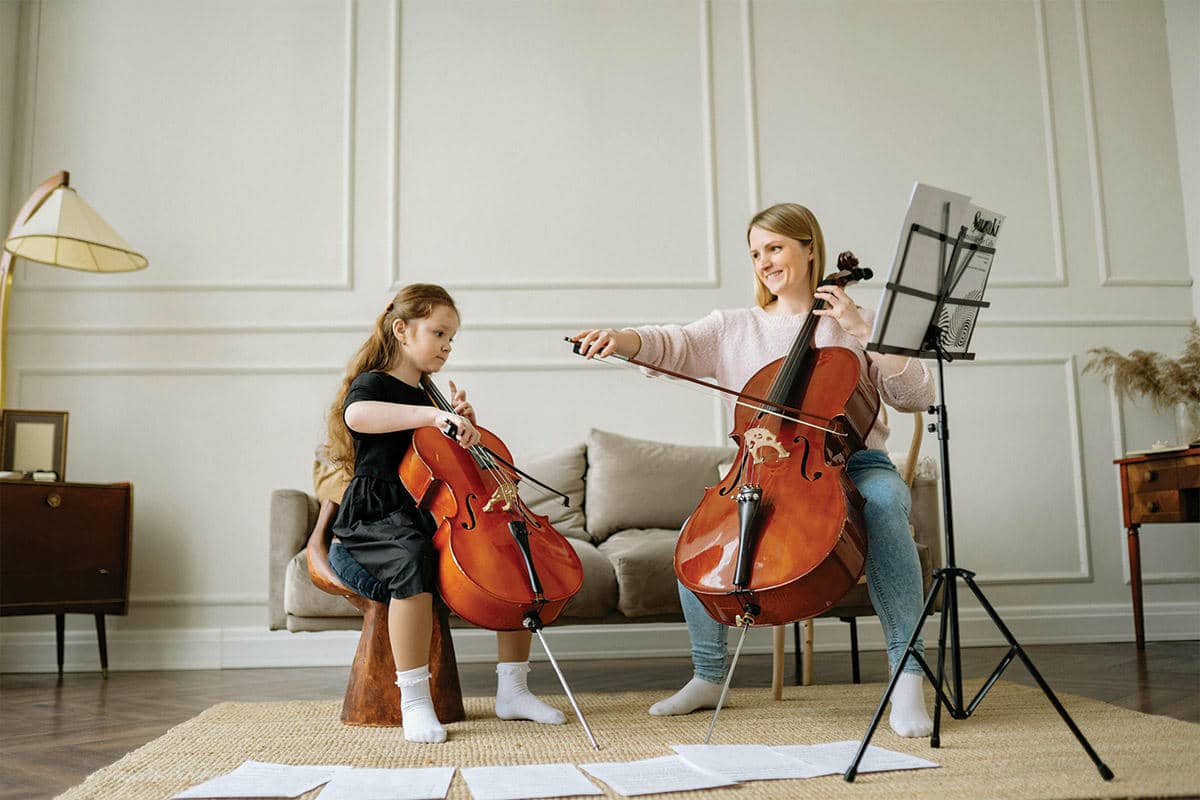
The Unique Importance of Cello Lessons
The cello holds a special place in the world of music, often described as the instrument that most closely mimics the range and timbre of the human voice. This “singing” quality makes cello lessons uniquely potent for developing emotional expression and musicality. Unlike the violin, which plays the soprano role, the cello covers both the bass foundation and soaring melodic lines, requiring a student to understand both harmony and melody deeply. Physically, the cello demands a level of core strength, posture, and balance that creates a “whole-body” connection to the instrument. This physical discipline often translates to better body awareness and relaxation in daily life, while the mental challenge of reading bass, tenor, and treble clefs sharpens cognitive flexibility.
Why CIMA is the Ideal Place to Learn
Central Illinois Music Academy (CIMA) is the premier choice for cello instruction because it offers the structured support system that is vital for such a physically demanding instrument. At CIMA, students aren’t just taking isolated lessons; they are part of a program that prioritizes correct ergonomic setup from day one—crucial for preventing the back and shoulder strain common in self-taught cellists. The academy environment provides access to vetted instructors who can guide students through the specific hurdles of cello technique, such as the complex thumb position and vibrato. Furthermore, CIMA’s community focus allows cellists—who are highly sought after for ensembles—to easily connect with pianists and violinists for chamber music, accelerating their growth through collaboration.
The Process of Learning the Cello
The journey of learning the cello begins with finding the “seat of power”—establishing a posture where the instrument rests securely against the chest and knees, allowing the arms to move freely. The early stages focus heavily on the bow hold, which requires a pronated (inward-turned) hand shape to leverage arm weight into the strings for that signature rich tone. Because the cello has no frets, students simultaneously train their ears to find precise pitch through muscle memory on the fingerboard. Lessons typically progress from open string bowing exercises to mastering the “first position” notes, eventually advancing to shifting the left hand up the neck to unlock higher registers. This systematic layering ensures that the student builds a resonant, professional sound rather than a scratchy or thin tone.